In case any of you guys are planning a soiree to celebrate (I'm not, but I am getting together with a friend to play through it in an EPIC MARATHON on Sunday) here are a few drink suggestions for you, courtesy of The Drunken Moogle. Remember to drink responsibly.
The Triforce Ingredients:1 Part Link (dark Rum for courage)
1 Part Zelda (99 Bananas for wisdom)
1 Part Ganon (Goldschlager for power)
Would not recommend drinking before taking on the Water Temple.
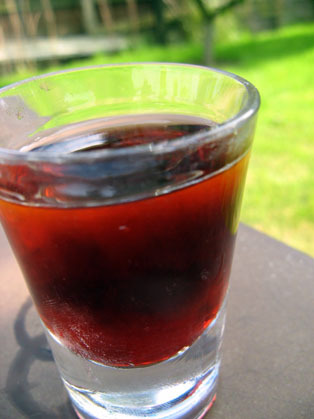
Goddess of Power
Ingredients:
1 cl grenadine
1 cl licor 43
1 cl Cassis Bar Sirup (cassis syrup)
Directions: Mix all ingredients in a shot glass and let loose the fire.
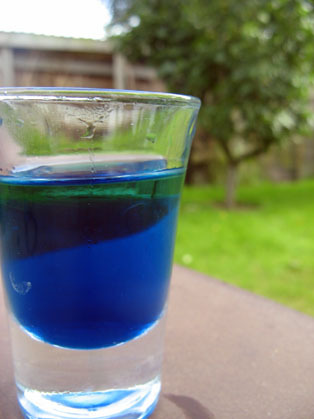
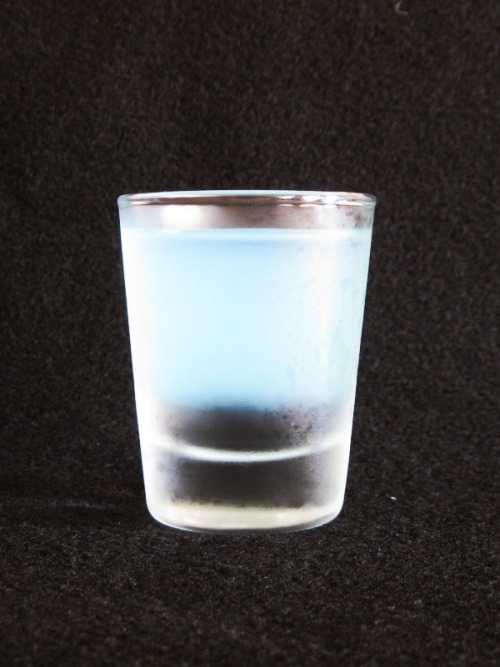
Goddess of Wisdom
Ingredients:
1 cl Bénédictine
1 cl vodka
1 cl Bols Blue
Directions: Layer into a shot glass, with the Bénédictine on top.
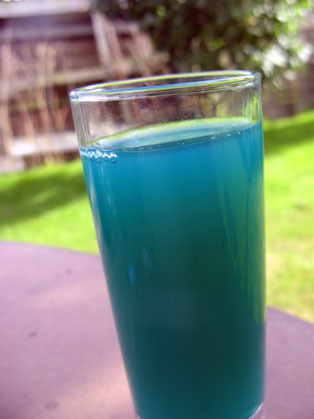
Goddess of Courage
Ingredients:
1 cl vodka
1 cl Xante
1 splash of Bols Blue (blue curacao)
Top with orange juice
Directions: Pour ingredients into shot glass. Take care to only use a little blue curacao, or the color will turn out more blue than green.
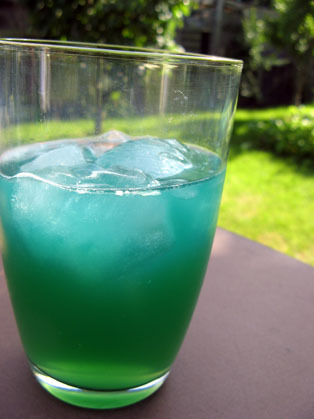
Young Link (“Virgin” Cocktail)
Ingredients:
1 cl Monin Cucumber
1 cl Monin Pistachio
1 cl Monin Honey
1 cl Lime Juice
5 cl Apple Juice
Directions: Shake all ingredients with ice and pour over ice in a highball glass.
Adult Link
Ingredients:
1 Young Link Cocktail
1 Goddess of Courage Shot
Directions: Mix up a Young Link drink. Pour in a Goddess of Courage shot to grow up a bit.
Directions: Place shot glass and all ingredients in the freezer and chill thoroughly. Remove, pour in mentholmint schnapps, mix hpnotiq and vodka and layer on top of schnapps. Down quickly while it’s still cold.
Freezard
Ingredients:
1.5 parts UV Blue Vodka
1.5 parts Lemonade
1 part Mountain Dew “White Out” (limited edition, we don't have this in Canada so try 7-Up instead)
Directions: Fill glass with ice, crushed or otherwise. Pour UV Blue and lemonade into the glass, then top with Mountain Dew White Out (or 7-Up.)
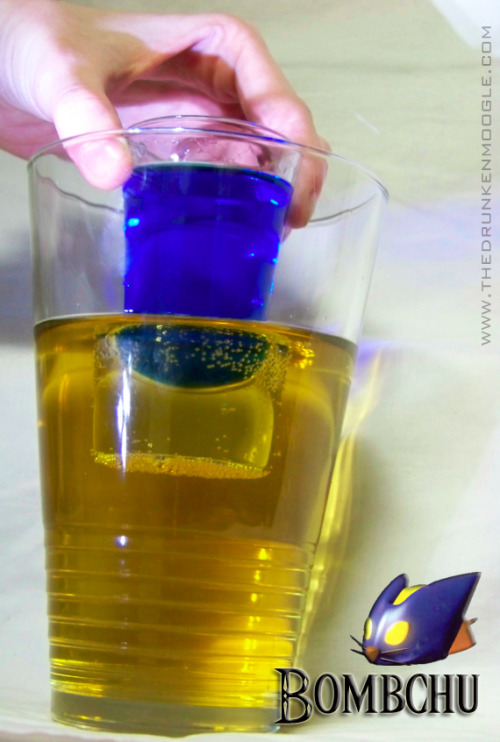
Bombchu
Ingredients:
1 shot Blue Curacao
1 shot Blueberry Vodka
1 Red Bull
Directions: Pour the Red Bull into a tall glass. Mix in the Blueberry Vodka. Pour a shot of Blue Curacao in a separate shot glass. When ready to drink, drop the shot into the tall glass and drink quickly.
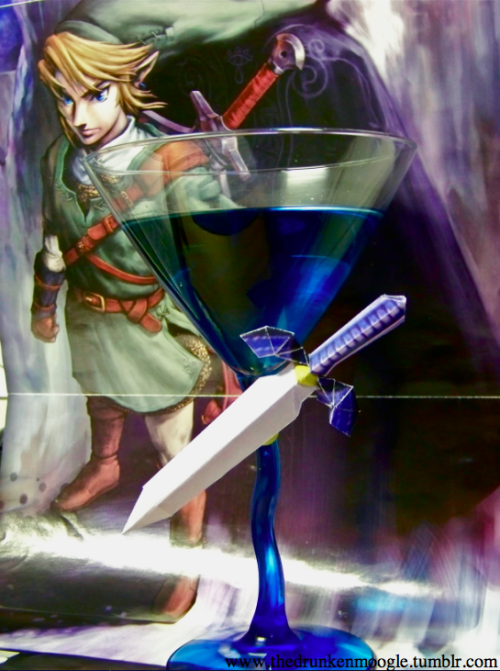
The Master Sword
Ingredients:
1 shot Gin
1/2 shot Blueberry Vodka
2 shots Blue Raspberry Martini Mix
Smallest Splash of Grenadine
Directions: Shake Gin, Vodka, and Martini Mix and pour into martini glass. Add Grenadine until the color is right.
Goron
Ingredients:
2 cl Amaretto
1 cl Frangelico Hazelnut Liqueur
2 cl Monin Pistachio
2 cl Bols Creme de Cacao Brown
2 cl Caramel Liqueur
1 cl Monin Honey
Directions: Shake ingredients with ice and pour into a rocks glass.
Have a good time this weekend if you're going to spend it playing Skyward Sword, and remember - if you want somebody to blame for your hangover on Monday, blame the Drunken Moogle for this awesome collection of Zelda drinks.
It's time for another exciting installment of Zelda's advertising schemes! We begin with Four Swords Adventures for the Gamecube.
This little beauty is a North American commercial for Four Swords Adventures, and is bizarre on a level which most Zelda commercials haven't been since the 80s. From what I can gather, this guy has randomly invaded a woman's office in order to rant about Zelda. Maybe she's his new therapist. This commercial also features the most horrifying voice in the world saying "gamecube."
This is the Japanese one. I really have no idea what's going on, but from what I can gather it involves old people eating crab. Maybe they're pissed because their crab doesn't link up to the Gamecube like the SO AWESOME GAMEBOY ADVANCE DOES!
Here are two commercials for Minish Cap, one of the least popular (and hardest to find!) titles in the Zelda series.
This is the American one. I'm a bit conflicted on the message. It's either that you can still be an awesome hero even if you have long, douchey hair, or that psychoactive drugs make this game way better.
This is the Japanese one. Apparently this game will make you either a massive giant or shrink a lot. I can't imagine why Minish Cap didn't sell more copies.
The next game that was released in the Zelda series is very well-loved - Twilight Princess. It was simultaneously released for the Gamecube and Nintendo's new console, the Wii, and was hailed as a return to the more realistic style of Ocarina of Time and Majora's Mask after a long line of surrealistic, cartoon-like installments.
Here's one of the the many American ones. This commercial pisses me off - it reminds me of being thirteen and having some friend invite me over to "check out this sweet new game" which meant that I had to sit there for three hours watching them repeatedly run into walls because they suck at video games damn it JUST GIVE ME THE CONTROLLER ALREADY.
Pardon the flashback. What you'll notice about this ad is that it's just as much about the Wii's motion-sensing functionality as it is about Twilight Princess - because TP was a launch title, it had to serve double-duty as a solid standalone title and as a reason to drop several hundred bucks on a brand new machine.
The Japanese commercial is very similar to the American one; a rare instance of both Nintendo Japan and Nintendo America having the same ideas about how to promote their product. There's a little more focus on the cinematic aspect of Twilight Princess, though, rather than just gameplay. The European commercials are identical to this one, just with a dopey-looking white guy instead of the stylish-looking Japanese bro.
Phantom Hourglass was released shortly after Twilight Princess for the relatively unpopular (at least at that point, anyway; it's almost the best-selling system ever now) handheld console, the DS. It was a relatively direct sequel to Wind Waker. Nintendo had just released a new, slimmer version of the DS - called the DS Lite - and were looking for sales. In the same way as Twilight Princess was meant to sell the Wii, Phantom Hourglass was meant to sell the DS Lite.
This Japanese commercial focuses pretty much exclusively on showcasing how the DS's touch stylus would function in gameplay. Personally, I found it a pain in the ass to use - I'm old like that - but it was pretty innovative at the time.
The first American one is similar in that it shows a lot about how you're meant to play Phantom Hourglass, but also in the kind of people Nintendo was courting with this game (and the DS Lite) - casual gamers. These people are unnervingly normal and even kind of trendy, which makes geeks like me uncomfortable, but it seemed to work out pretty well for Nintendo.
The second one is one of the less popular Zelda commercials. To quote a YouTube commentator:
"if i had never heard of LOZ before, i wouldnt bother buying the game just because of this commercial
why don they just let the chicks stare at the camera for 30 seconds and at the end say "buy this", its essentialy what they're doing!
this commercial blows...."jewels"...NO THEY ARE CALLED RUPEES!!!!!!!!!!
god!!!!!!!!!!!!!!!!!!!"
Shortly after posting this comment, this guy probably died of female-inflicted heart failure. The point is, Nintendo was showing that anybody could pick up a Zelda game - even us game-deprived little girls.
The next game in the series is Spirit Tracks, another sequel to Wind Waker, set something like 100 years after the end of Phantom Hourglass in a far-off kingdom.
This video has both the U.K. commercial and the American one, which is nice because they're both very different. The U.K. one is obviously targeted to a younger audience - the friendly, BBC kids programme-type announcer and the bright, cartoony graphics really highlight those aspects of the game.
The American one is targeted to a more mature audience, and is darker in tone. Nintendo America also brought back their "immersion-style" ads with this game, showing some random kid being teleported into the world of Zelda. I guess they find it effective - I'm just worried about whether or not that kid should come off his meds.
The Japanese commercial is very similar to the one for Phantom Hourglass, which makes me kind of sad. I was hoping for more dancing or some crab legs or something, but it's all about the gameplay for Nintendo Japan.
Finally, we come to the as-yet-unreleased Skyward Sword, which drops on November 20th.
The North American commercial doesn't bother with footage of some guy waving around a Wiimote - it's straight into the setup of the game, which gives you a little background into the plot before you even pick it up. The graphics look great - like a perfect cross between Wind Waker and Twilight Princess - and the setting looks unique.
The Japanese commercial is also unusually narrative for a Zelda commercial, giving us a little bit of insight into Link and Zelda's relationship and some more hints on how the game might look while being played. I'm certainly excited.
And that's it for all the Zelda games to date! I hope you enjoyed this journey through Nintendo's often-questionable promotional campaigns for everybody's favorite series. If I see any more interesting Skyward Sword commercials as we get closer to November 20th, I'll be sure to add them.
Lots of people are geeks. In fact, I think it would be hard to find a single person these days who doesn't like something you might traditionally consider geeky. More than ever, geek-isms rule pop culture from the very bottom up, from television shows like Game of Thrones all the way to the hundreds of millions of copies of Angry Birds out there on smart phone.
And then there are the people who are really geeky.
When my husband and I tied the knot at the end of 2012, I spent a lot of time on the internet looking for ideas for our wedding. During that time, and since, I've come across a surprising amount of shockingly geeky wedding material - cakes, costumes, themes, etc. To incorporate your favourite hobby, game, movie or show into your special day shows a level of nerd that few will ever reach, so I feel like these dedicated (if a bit odd) fans deserve to be immortalized. This is just a small sample of the best (and nerdiest) wedding offerings out there.
This seriously nerdy bride-to-be had her wedding ring custom designed with Zelda in mind by Rogers and Hollands. It cost over $2000 and features yellow and blue sapphires set in white and yellow gold.
She may never be able to visit the Sacred Realm with this thing, but by God, nobody will ever question her geek cred again.
This incredible Trekker-friendly ring was designed by Paul Bierker of Paul Michael Design in Pittsburgh. Ranging in price from $600 (for cubic zirconia and sterling silver) to an eye-watering $10,000 (for blue diamond and white gold), this ring is ready for you and your sweetie to boldly go where no couple has gone before.
Paul Michael Design does an incredible variety of geek-friendly rings and jewellery. Themes include Wonder Woman, Star Wars, Zelda, Doctor Who, Battlestar Galactica, and, of course, Star Trek.
Yes, there is literally a Pokemon engagement ring out there. This beauty is just a concept piece by the wonderful online geek jewellery retailer Art & Gems Jewelers, but they are putting it into production due to high demand.
Art & Gems has a small selection, but they are absolutely gorgeous pieces that any die-hard geek would be thrilled to receive from her sweetie. Check out their TARDIS rings in particular!
The Cake
There are a ridiculous number of geek-themed wedding cakes. Here is just a small sampling of my favourites.
via wedinator.icanhascheezburger.com. Apparently, the Master Sword was an actual knife and the groom
used it to cut the cake during the reception. I love the blue and pink fairies!
Tragically, the creators of this incredibly amazing Mario Kart cake (Let Them Eat Cake from Costa Mesa, California) have since gone out of business. This is still the best and most intricate wedding cake I think I have ever seen, geeky or not. Every element of the cake was apparently edible, from the turrets on Peach's Castle to the item boxes around the bottom.
This awesome D&D cake was created for a groom by Mike's Amazing Cakes in Redmond, Washington. I love the D20!
With thanks to Jacqueline Morrow
This adorable Dalek cake was front-and-centre at Jacqueline Morrow's wedding to her hubby, Daniel. You don't need to have a ten-tiered couture cake to express your love of all things geeky! "It was my special day and I didn't want what everyone else did," explained Jacqueline. "Me and my husband are both Whovians, me slightly more so. It just seemed more personal." I salute you, Jacqueline!
The Bride and Groom
Everybody wants a fairytale wedding. For some, this dream apparently manifests itself as wedding cosplay.
This couple decided to have a Zelda wedding right out of any Nintendo-addled child of the 80's dreams. I particularly enjoy the officiant reading out of what appears to be a Watchmen comic book.
This bride is radiant in a dress based on Rydia's costume from the classic JRPG Final Fantasy IV. Her dream dress was the vision of God Save the Queen Costume Replicas, a well-established cosplay house. Her spouse looked dapper in a Musketeer-esque outfit, complete with feathered hat.
This incredibly badass power couple decided to have a Norse wedding. Both wear period-accurate 10th-century Norse garb, and their wedding ceremony was performed in both English and Icelandic. Hide your flocks and treasure; watch for these two on a western shore near you.
I'm going to be honest with you guys - this post has all been leading up to the fact that there is a couple out there that had a Zelda ice luge at their wedding. It doesn't matter if nobody you know drinks alcohol - even Mormons can chill their juice with this bad boy.
What all of this really goes to show is that there's somebody out there for everybody - even you, dear reader! Until next time, happy spouse hunting!
As promised, I'm back with some incredibly creepy Majora's Mask commercials. These commercials mark a really distinct departure from the older ones - you can tell they were trying to broaden their market, make the games look modern, and they seemed to be actually advertising in the spirit of a horror game, which is interesting.
This is a North American commercial for Majora's Mask. There's a really apocalyptic air to it - there's almost no indication that it's a Zelda game until the very end.
The Japanese commercial has a similar feel. Apparently, Nintendo's new sales technique was to imply that the world will be destroyed if you don't play their games.
There were less commercials for Majora's Mask than for previous games, but as you can see, they had much higher production values.
Nintendo's second stab at handheld Zeldas - Oracle of Ages/Seasons - had its own limited promotional campaign.
These are the Japanese ones. They feature a terrifyingly disproportioned Link who looks like he is going to eat you in his sleep, but they're cute in their own way.
This is the extremely memorable North American Ages/Seasons commercial. They very wisely decided to create a 3D commercial and ignore gameplay footage - by this time, the Gameboy Color's graphics were so outdated that there was little point in promoting them. The high-quality (for the time) 3D commercial created an illusion of a high-tech, fully modern game. What Nintendo was really offering was to Link's Awakening what Majora's Mask was to Ocarina of Time - same graphics, same engine, same gameplay, in a new box with a new storyline.
Now we get into interesting territory. Shortly after Majora's Mask was released, Nintendo announced the launching of a new console - the Gamecube. There was a lot of speculation as to what the "next generation" of Zelda would look like, until Nintendo shared this tech promo at SpaceWorld 2000:
Fans went mental. It was exactly what they wanted - just like the N64 Zeldas, but prettier, darker, and grittier. This was the kind of game everyone was expecting. The next year, however, Nintendo showed up at the same event with this:
The outcry was huge. Fans declared the Zelda series dead and buried. I remember commenting that Link's head looked like a lemon. (Looking back on it now, this is the best promo video Nintendo has ever released - Link's cheeky wink is the cutest!)
Nobody had ever seen a game that looked anything like Wind Waker before; it was totally unexplored territory. In my opinion, this is one of the first and last times that Nintendo has ever successfully managed to surprise anybody.
Wind Waker still has its critics, but as commercials and promos started to come out, the charm and appeal of the game really started to become apparent. This was a new Zelda, and it was for everybody.
The Japanese one was very straightforward - no frills, no gimmicks, entirely gameplay footage. Nintendo wanted their fans to see new and interesting mechanics that they'd introduced thanks to the Gamecube's power, not actors.
The North American ones tried to play up Zelda's reputation and nostalgia value. It totally worked.
The first was straightforward gameplay footage, with the classic trailer music (Nintendo has used it several times.) Unfortunately, the tone of the commercial is almost humorous when paired with the footage - Wind Waker is just too cute for voice overs like that.
On the other hand, tell me you can watch the second one without wanting to run out and play this game now. It combined the classic live-action inserts of earlier Zelda commercials with excellently placed gameplay footage and an intriguing little legend narration. In my opinion, this is really the commercial which sold the game in North America.
Tune in next time for more exciting commercial action as we get into the modern Zeldas, from Phantom Hourglass to Twilight Princess to the as-yet-unreleased Skyward Sword.
And we're back. I left you last week in 1993, at the beginning of the great wide gulf of nothing that Nintendo didn't fill again with Zelda goodness until 1998.
Somewhere in between there, gaming changed. Sega, who had been neck-and-neck with Nintendo in the console wars, was suddenly slipping far behind. Their console, the Saturn, hadn't done as well as predicted. Out of nowhere, Sony entered the race with their new, fancy CD-ROM console - the Playstation. Nintendo matched their competitors with a shiny new 64-bit console, dubbed (appropriately) the Nintendo 64, or N64 for short.
The competition was ferocious, and as a result, all the companies stepped up their advertising budgets. Ocarina of Time was the new, hotly anticipated (and very delayed) Zelda game, and it got a lot of commercials.
Here's a couple Japanese ones:
Summary: Girls like Zelda. If you like Zelda, girls will like you, and you can make funny noises together! This may also be an early attempt to capture the female gamer market, but somehow I doubt it.
Here's the North American one, which is actually not bad:
Apparently they fired the guy who did the previous ones, which is probably good.
But the most interesting thing I have to show you from Ocarina of Time is this French promo commercial of the Ocarina of Time beta. It was known only as Zelda 64 at the time, and as you can see the end result was pretty different:
I also want to share a commercial for a drink that Link featured in as an early example of video game cross-promotion outside of Japan:
The drink is called Mirinda, and it's from Mexico. Link's a mega sellout.
That's all for this time, folks, I'll be back later with some extra creepy commercials from Majora's Mask!
Hey, team. No more progress on Zelda II - after a three-hour attempt at getting through the Grand Palace to beat the game, we only got as far as turning the Thunder Bird blue and didn't score a single hit on him. It's going to be a little while before any of us has the strength to make the attempt again.
Master Quest, on the other hand, is going fairly well - at about three hours of playtime, I've just entered Jabu Jabu's belly (the third dungeon,) which is slower than my usual runthrough time by about half an hour but I'm pretty happy with my time so far. I'll try to get an update up sometime this week.
For now, though, I want to share with you a very special part of Zelda history: commercials. Zelda was one of the first games popular enough to afford its own television commercials, and boy, were they ever special.
Walk with me now back through the ages to a strange and distant land called the 1980s...
I hope you'll pardon the horrendous quality. As far as I'm aware, this is the first Zelda commercial ever released. They're really advertising Nintendo Power more than the game itself. Look how cool those kids are. Also, they've clearly never actually played the original Zelda, since if they had, they wouldn't be smiling. I guess it's better than doing whatever else kids in the 1980s did, like starting fires with rocks and building grass huts or whatever.
That commercial was followed by this one, exclusively for Zelda this time. I always think this says a lot about who Nintendo thought their demographic was in the 1980s.
"It's fine, Earl, just have somebody shout out random keywords and they'll get the picture. Everybody knows gamers have a vocabulary of fifty words maximum."
"Okay, well, I guess I'll go down to the theatre school and see if we can find some kid to do it..."
"No way! My cousin Tony just got out of rehab, he'll do it for free!"
Now we zoom forward to the exciting release of Zelda II. Let's compare the Japanese Zelda II commercial and the North American one.
Let's analyze what each of these games are saying about Zelda II.
Japanese:
- If you play this game, you will become Link.
- The lady who runs your corner store is a fucking wizard and has a portal to Hyrule. - Even the Japanese think Link looks like a girl.
- This game looks pretty fun. Ha! Ha! Ha!
North American:
- You will run around a lot screaming ZELDA! ZELDAAAAA!
- Mostly you will be in dark passages.
- Mostly you will fall down pits and people won't be able to help you.
- You will eventually end up pounding the screen in anguish and despair, praying your psychic angst will be enough to rouse the pixelated princess from her sleep so you can please sweet Jesus stop playing this game.
I really feel like the North American commercial captured the spirit of the game better.
Now we escape the 1980s and emerge in a gentler, kinder time - a time not so different from our own called the 1990s. With the disappearance of neon and leotard from the wardrobes of the youth, the world was finally cool enough to allow the SNES to appear from the void of quintessence.
Let's talk about Nintendo's advertising scheme for A Link to the Past. North Americans got this:
Apparently Link is a 40-year-old extra from Robin Hood: Prince of Thieves who is also an Immortal Highlander-style. This has nothing to do with the game.
What about the Japanese commercial, you ask?
Dance party. Also, Link is still a chick. Maybe we've been missing something in translation all along over here. Basically, this is the greatest commercial ever made by anyone, and almost twenty years on I'm still waiting for Dance Dance Revolution Zelda Megamix seriously Nintendo email me and we can talk about it.
Fast forward three years later to 1993 and the first Zelda title for the Gameboy, Link's Awakening. Nintendo had to do something awesome. Something revolutionary. Something...
...With, um, scary puppets. Well, it certainly is...modern.
Nintendo America decided to take a leaf out of Nintendo Japan's book and go with a rapping dude to advertise the game, proving two things forever: that Nintendo was hip with the kids, and that Japanese people are just really better at rap than North Americans are.
So, that takes us up to the awkward Zelda gap years, spanning from 1993-1998. This seems like a natural gap to leave you with these enjoyable little nuggets of gamer history until next time.
Have you ever really liked something in a game and wished you could have it in real life, but it's so obscure that nobody would ever make an action figure of it? I get that all the time.
There's an answer - Papercraft. Extraordinarily patient fans meticulously crafting 3D models out of paper and glue. Here's some of my Zelda favorites.
There are literally thousands of patterns available, so if you find yourself with some time to kill and printer paper to spare, you should give it a try. I know I will.
Okay, it's time to abuse you guys with a little nerd rush. I apologize in advance.
Recently, mostly as a result of playing through the series, I've found myself collecting a lot of Zelda memorabilia, manuals, and games. It's become kind of a thing. So, as part of my nerd rush this afternoon, I thought I'd keep a little post for myself here where I can update the Zelda chachkes I have hanging around in my house.
Not pictured: LttP for SNES, Twilight Princess for GC, Zelda for Virtual Console, Wind Waker for GC.
My favorite thing is the Ocarina of Time case, which I think is actually a VHS box. The guy I bought it from when I was a kid seems to have taped the panels from the original box onto a more durable plastic case.
The Majora's Mask cartridge I received in the mail two or three weeks before the game came out, and it has "not for resale" on its surface.
Link's Awakening, Ocarina of Time, and Twilight Princess Player's Guides.
My favorite thing is the Link and Navi plush doll. It's one of a kind. :)
Also pictured are some bookmarks and an art print (cut off) from a local artist.
It is my hope that as I get more money and play through more games, I will also collect more stuff. As I do, I'll post whatever I get here with some new pictures!
There are many popular timeline theories regarding the Zelda games, as I mentioned when I started the first game in the series. There are hints linking the stories together in the games themselves; mentions or images of previous games, references to former Links in background stories; and of course, references to the same locations throughout the games, such as Kakariko Village, Death Mountain, and Lake Hylia.
Recently I've come across some convincing timelines which I thought I might share, because I really think it adds a lot to the series to try to establish some kind of context for all of the Zelda games. Realistically, Nintendo has never released a timeline and probably never will - timelines are constantly undermined and rewritten by the presence of new games, and it's completely possible that all the Zelda games were never really meant to be linked together beyond tenuous references.
Regardless, Zelda fans need something to do when they aren't gaming, so there are three dominant timeline theories which are constantly debated between by Zelda fans today; the folk tale/legend theory, the split timeline theory, and (to a lesser extent) the linear timeline theory. I'm going to outline them here, plus some examples of each.
1. Folk Tale/Legend Theory
"This is but one of the legends of which the people speak."
There's a theory that the Zelda games are meant to be interpreted as a collection of folk tales or legends - substantiated by a quote from the beginning of Wind Waker, "this is but one of the legends of which the people speak" - which are based on some distant truth, constantly changing and shifting in the retelling. In that sense, this theory states that there is no timeline, because the games are all separate versions of a source legend which we don't have access to. Supporters of this theory suggest that Nintendo has verified this reading, as this article reports, although it is important to remember that stock replies do not necessarily reflect an authoritative stance. See The Truth About The Timeline, an article on Zelda Informer, for more information on this theory.
2. Split Timeline Theory
the GameTrailers timeline
The "split timeline" theory is one of the only elements of the timeline which has been verified by a high-up at Nintendo. The "split timeline" theory is explained as follows by one of Zelda's creators, Eiji Aonuma, who described Twilight Princess's placement in the chronology as follows:"It is a world 100 and something years after Ocarina of Time...The Wind Waker is parallel. In Ocarina of Time, Link leaps to a world seven years later, defeats Ganon, and then returns to the child era, right? Twilight Princess is the world 100 and something years after peace is restored in the child era." Therefore, the split timeline theory consists of two halves - the world that Adult Link in OoT saved and then left, and the world that Child Link returned to after leaving the world he had previously saved. Most modern timelines are based on this theory, with some differences between them.
2a. The one which I have been supporting throughout this blog was put together by GameTrailers during a retrospective look back at the Zelda series; here's the link. This plotline is a little out of date, as it came before Twilight Princess was released, but it is still the one most commonly cited by fan despite its inaccuracy in placing Twilight Princess on the Adult Link side.
The ocarinahero10 timeline
2b. The now-famous ocarinahero10 timeline claims to be infallible and backed up by substantial in-game evidence; it diverges significantly from the GameTrailers timeline and includes all the games up to Spirit Tracks, which was released in 2009. Nintendo released a statement in response to this timeline, saying that no real timeline was possible for the Zelda series, provoking ocarinahero10 to start an internet poll to try to change Nintendo's mind. His theory also relies on a game in the Young Link timeline to connect between Twilight Princess and Minish Cap detailing the destruction of the Master Sword, represented by the question mark block on that side.
3. Linear Timeline Theory
Linear timeline theories are by far the least popular of the three 'branches' of theories, largely because the split timeline theory has been (at least partially) verified by Nintendo. The basic element of a linear timeline theory is simply that there is only one timeline - not a Child/Adult Link split which occurs after the Ocarina of Time. In the linear timeline supporter's opinion, the ending of the Ocarina of Time is irrelevant; by going back in time to change the past, Young Link erases the future in which he saved Hyrule from Ganon and freed the sages from their respective temples. Instead, we are left with a world in which Young Link warns Princess Zelda of Ganondorf's plans (although it isn't clear what evidence he provides) and as a result, Hyrule remains safe.
jjwil1991's linear timeline
3a. While LinkandMarioman doesn't offer his own timeline, he does address some problems with the split timeline theory here; I apologize for the quality of the video, but it's actually kind of difficult to find linear timeline supporters these days. (If you ignore the first three of his arguments, he does raise some interesting points.)
3b. There is a timeline by jjwil1991 which is one of the very few complete linear timelines still remaining; it's an interesting spin on the Zelda legend's continuity.
4. My Incredibly Awesome Theory
Okay, it's not really awesome and I don't have one yet, but I'm planning to release my own statement on what order I think the Zelda games should go in (if any) once I finish playing through the games. I'm starting to get kind of an idea of where I think things should go, but I don't want to stick my foot in my mouth before I know what I'm talking about.
In the meantime, I'll continue referencing the GameTrailers timeline - with some changes - in my reviews, because I think of all those listed, the GameTrailers timeline is the most genuinely well thought-out (despite the errors due to time.)
I hope this was somewhat interesting - if you have any comments or questions regarding Zelda timelines, comment and I'll be sure to reply.

 Goddess of Courage
 Navi
Navi 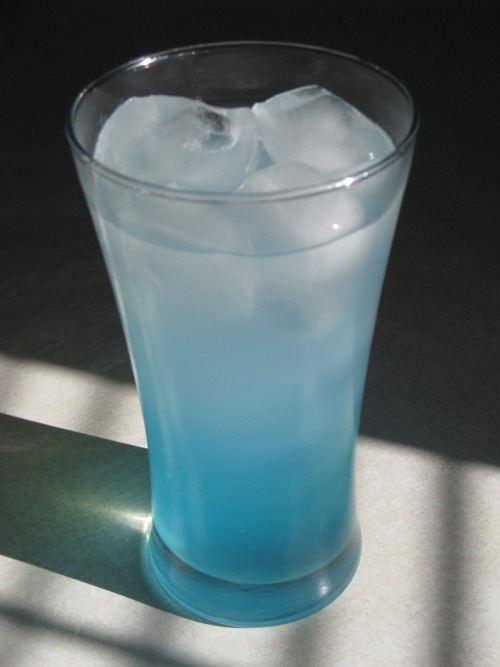



.png)


